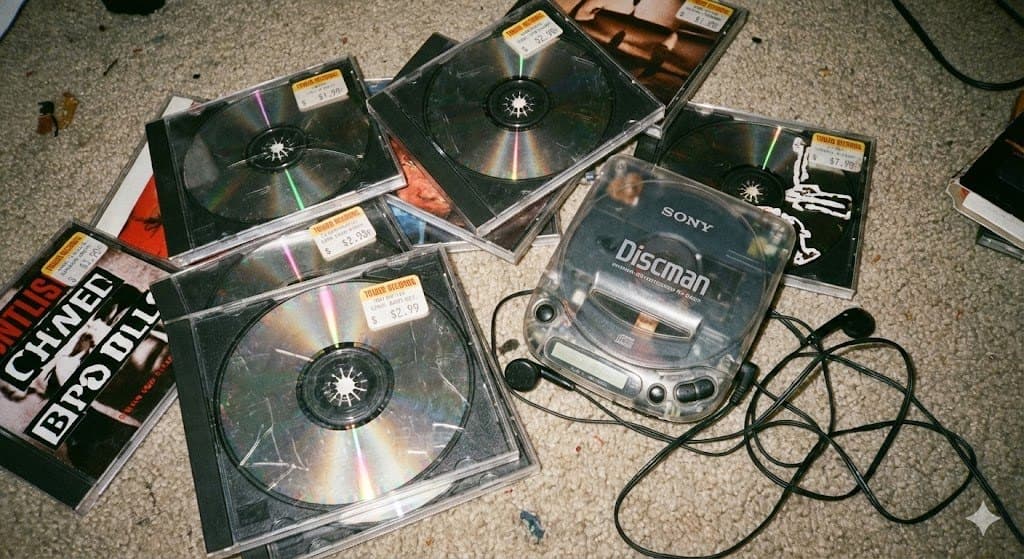
The Jewel Case Revenge: Why 2026 Is the Year We Fell in Love with Plastic Again
Latest News
6 min read
Latest News

LyricsWeb Culture Desk
For a brief, shining moment, we thought we were done with them. We thought we had evolved past the fragile hinges, the impossible-to-remove price stickers, and the heartbreak of a scratched surface causing your favorite track to stutter like a nervous teenager. We were wrong.
If you've been paying attention to the merch tables at gigs in East London, Brooklyn, or Shibuya this month, you’ve seen the omen. The vinyl records are still there, sitting pretty with their $45 price tags, reserved for the dads and the serious collectors. But the kids? The kids are swarming the stack of Compact Discs.
Welcome to the Compact Disc Renaissance. It’s cheaper, it’s uglier, and it’s exactly what the culture needs right now.
Let’s be honest: the vinyl revival was fueled by aesthetics, not practicality. You can’t put a record player in your pocket. You can’t listen to an LP while walking to the bodega. Vinyl demands you sit down and pay respect. The CD? The CD is trashy. It’s durable (mostly). It’s portable.
In 2026, where "scuffed luxury" is the dominant fashion trend, the pristine nature of digital streaming feels sterile. There is something delightfully mechanical about clicking a disc into a translucent player—a gadget that has become the ultimate accessory for the "wired headphone" generation. It’s a rebellion against the algorithm. Spotify wants to serve you a "Mood Mix." Your Discman plays the album from track 1 to track 12, whether you like it or not. That lack of choice is, paradoxically, the ultimate luxury.
While Western acts were busy trying to sell us NFTs, the K-Pop industry was playing the long game with physical media. They understood early on that a CD isn't about the music—it's about the artifact. Groups like NewJeans and BLACKPINK didn't just sell plastic discs; they sold treasure chests. Their albums are elaborate puzzles filled with photo cards, stickers, and posters.
This maximalist approach has finally bled into the Western mainstream. Artists like Taylor Swift and even alternative icons like Charli XCX have realized that if you want Gen Z to buy music, you have to give them something they can hold, unbox, and display on TikTok. The "Jewel Case"—once hated for its brittleness—is now a retro fetish object.
There is a darker undercurrent to this trend, too. We are living through the "Great Streaming Purge." We've all had that moment: you go to play your favorite deep cut on a streaming service, and it’s grayed out. Licensing expired. The artist got cancelled. The platform pivoted.
Buying a CD in 2026 is an act of preservation. It’s a way of saying, "This music is mine, and no terms-of-service update can take it away from me." It’s the closest thing we have to a musical bunker. The audio quality is uncompressed, the liner notes give you context that a scrolling screen never could, and yes, there is a hidden track at the end if you wait long enough.
So, go ahead. Dig out that binder of discs you shoved in the attic in 2012. Blow the dust off. The future of music sounds a lot like a laser reading a spinning piece of polycarbonate.
0/5.0 - 0 Ratings
Loading comments...